Instrument and equipment comparison
Instrument tuners for everyday practice: match the sensor, range and mounting
A tuner needs a usable signal from your instrument, not just a suitable-looking display. A headstock sensor, a room microphone and a cable input solve different problems. Before choosing one, check the instrument, the notes you need to tune, the mounting surface and the reference pitch used by the people you play with.
This listing-and-specification comparison considers the Snark ST-2 listing, Korg CA-2 and D’Addario Micro Headstock Tuner. It is not a hands-on comparison of tuning speed or accuracy, does not rank reliability and does not choose an overall winner.
Snark ST-2 listing: settle the version before choosing the power system
The exact ST-2 listing describes microphone and vibration-sensor modes and pitch calibration from 415 to 466 Hz. That calibration span changes the reference pitch; it is not a statement of the lowest and highest instrument notes the tuner can detect.
The listing mixes ST-2 naming with rechargeable-version imagery and power descriptions. Do not use the older ST-2 battery instructions as proof of the version that will arrive. Confirm the exact version, its power arrangement and the matching instructions before choosing it for a particular instrument or finish. A claim that a clip fits any headstock is not a guarantee for your instrument.
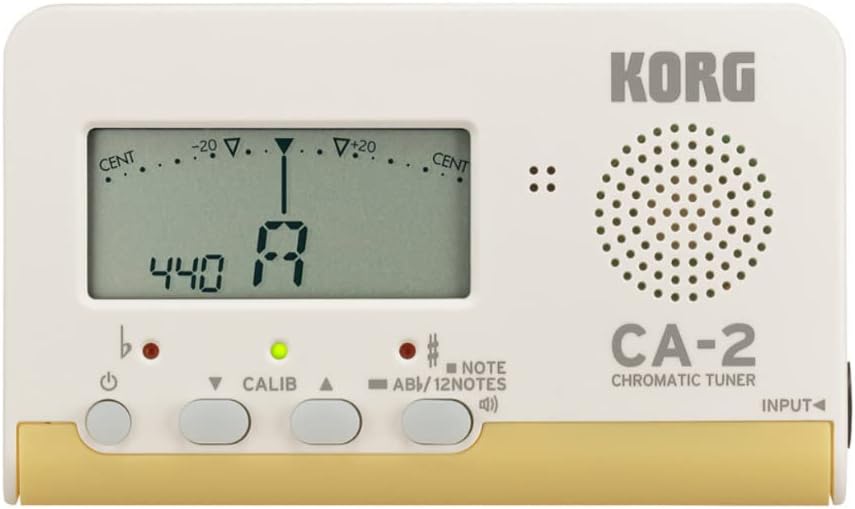
Korg CA-2: microphone or mono cable input
Korg’s CA-2 guide describes a built-in microphone and a quarter-inch mono input for an instrument with a pickup or an optional compatible contact microphone. Inserting a plug disables the built-in microphone; these are alternative signal paths, not two inputs to use together. A stereo plug is not the specified connection.
The guide specifies a detection range of A0 to C8 for a sine wave and reference-pitch calibration from 410 to 480 Hz in one-Hz steps. It also warns that overtones or a rapidly decaying sound can prevent detection even within the stated range. Treat those limits as a reason to check your instrument’s signal, not as a promise that every note will register in every room.
For microphone tuning, the guide recommends a quiet environment. Its Sound Out mode provides a reference tone to tune against by ear. Neither that speaker nor the display makes the CA-2 a substitute for an instrument amplifier. Confirm batteries and any contact microphone separately for the exact package.
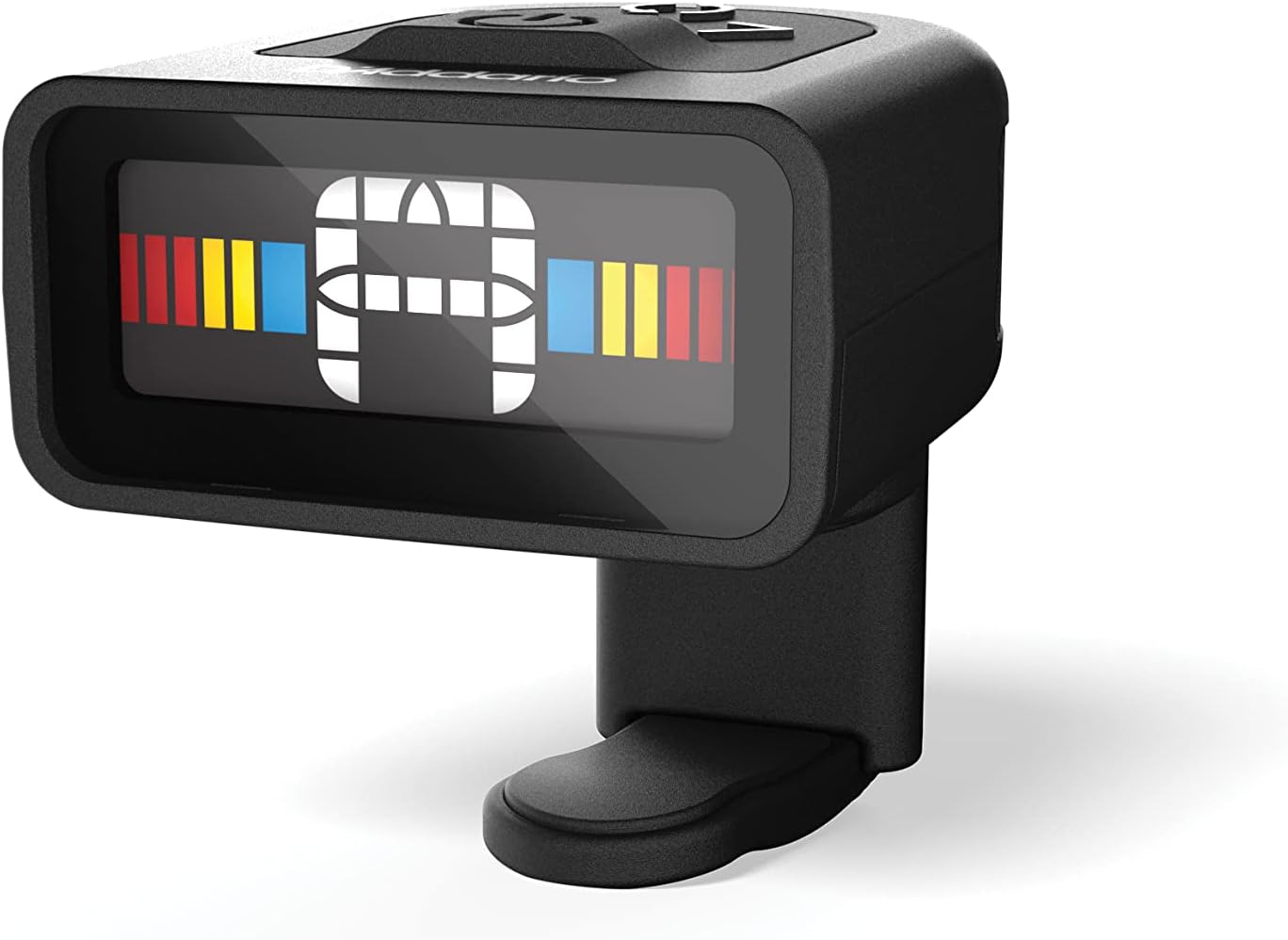
D’Addario Micro Headstock Tuner: a compact vibration-sensing layout
The exact listing identifies model PW-CT-12 and describes a piezo sensor that picks up the instrument’s vibration rather than using a room microphone. Its small headstock-mounted layout may suit a player who wants the display close to the instrument, but the clamp still needs a suitable place to attach.
D’Addario’s PW-CT-12 instruction sheet describes four display orientations and reference-pitch calibration from 410 to 480 Hz. That range is not a numerical detection-range specification, and it does not demonstrate that the tuner detects every low bass note or every instrument equally well.
Confirm the exact power instructions before buying replacement batteries: the captured listing’s battery descriptions are inconsistent. Do not assume the standard Micro, rechargeable Micro, clip-free tuner and other D’Addario families have interchangeable power systems or mounting arrangements.
Separate calibration from detection range
Reference-pitch calibration changes the tuning target, such as the frequency used for concert A. Detection range describes the notes the tuner can recognize. Those are different specifications. A tuner described as chromatic should not be treated as suitable for every instrument, register or pickup arrangement without checking those details.
A vibration sensor needs a secure, suitable point of contact with the instrument. A built-in microphone listens to sound around it, so nearby players and the room can affect the signal it receives. A cable input requires an appropriate instrument pickup or compatible contact microphone; it does not turn every acoustic instrument into a plug-in source by itself.
Check mounting and the complete package
Compare the clamp, display position and available clearance on the instrument rather than buying only from the size of the screen. Check the exact instrument finish against the tuner and instrument makers’ advice, and remove a clip when it is not needed rather than assuming that every finish can tolerate prolonged contact.
Treat included batteries, charging cables, contact microphones and multipack counts as exact-package details. Similar model names do not establish that a rechargeable model, a battery-powered model and a bundled version have the same controls or accessories.
The useful choice is the tuner that can receive your instrument’s signal, cover the notes you need and show a readable result in your practice setup. A wider advertised calibration span, by itself, does not establish better tuning or broader instrument compatibility.