Instrument and equipment comparison
Acoustic guitar starter kits: compare the guitar before the accessory count
A starter kit can put several essentials in one box, but a longer accessory list does not establish a better fit. Before comparing bags, picks or lessons, check the instrument’s body, string type, handedness and reach. A guitar described as suitable for beginners still needs to suit the person who will practise with it.
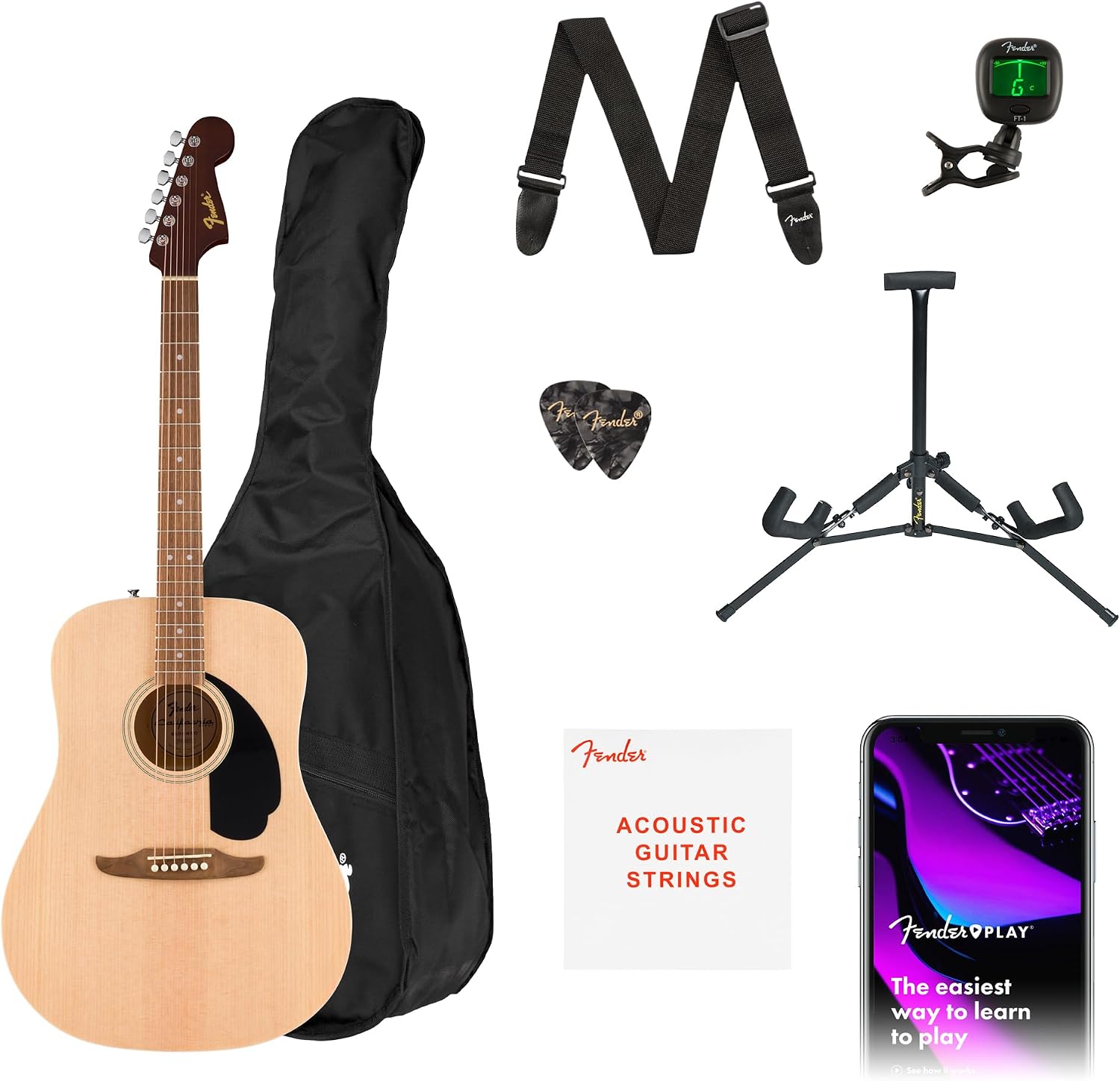
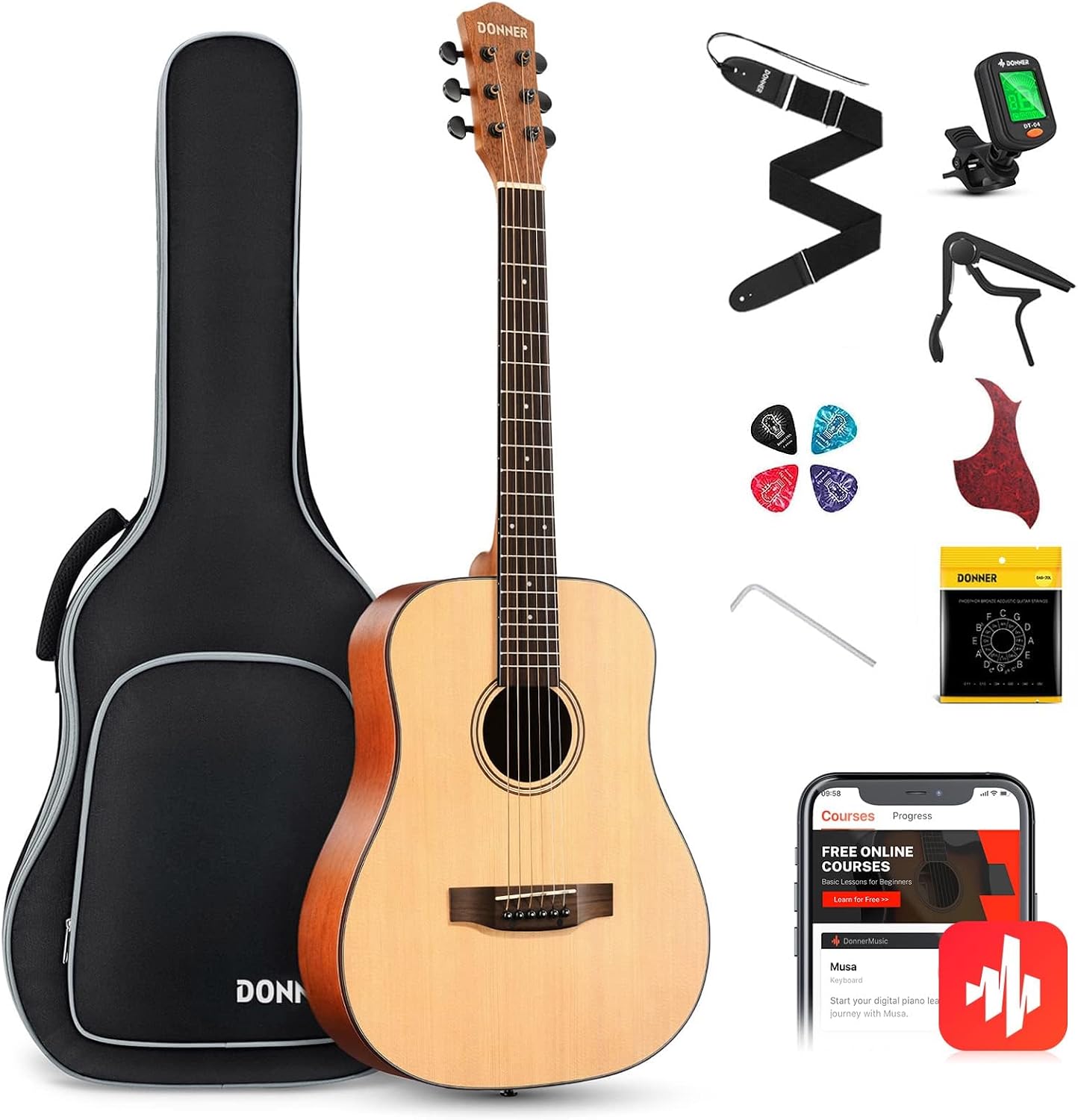
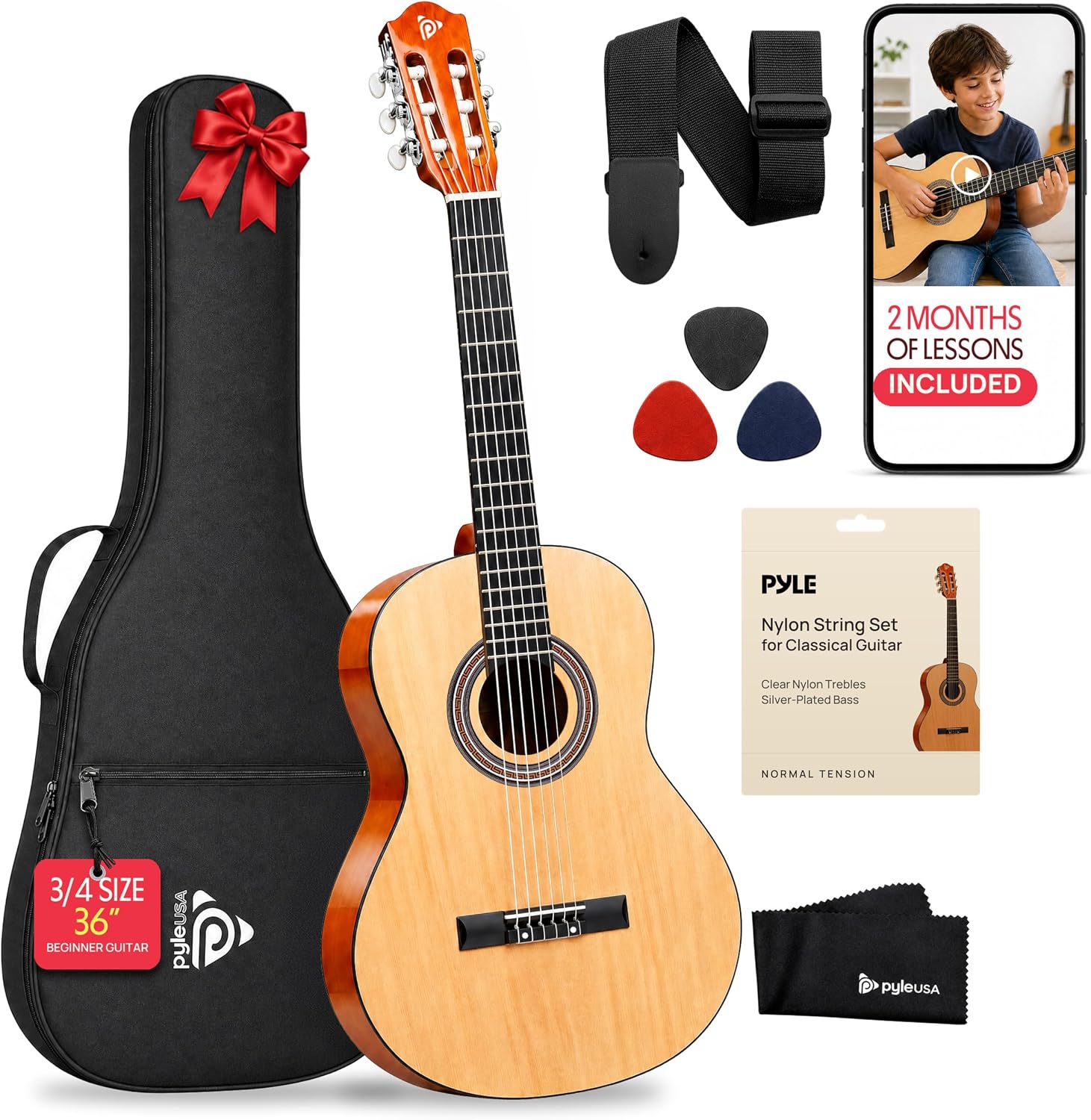
This listing-and-specification comparison looks at the Fender California Debut Redondo kit in natural, Donner’s 36-inch 3/4 dreadnought steel-string kit, and a Pyle 36-inch nylon-string classical kit. It is not a hands-on test or a ranking of tone, comfort or reliability.
Start with the instrument
The exact Fender listing describes a dreadnought body with laminate construction, a C-shaped neck and walnut fingerboard and bridge. Its package description names a gig bag, stand, strap, picks, clip-on tuner and extra strings. That establishes what the listing describes, not an independent check of every box supplied or a current offer guarantee.
The Donner listing identifies a right-handed, 36-inch 3/4 dreadnought with steel strings. It describes a spruce top and laminated mahogany back and sides, plus a padded bag, strap, tuner, capo, pickguard, spare strings, picks and cloth. Do not turn the 36-inch size description into a scale-length specification: total instrument length and the vibrating length of a string are different measurements.
The Pyle listing identifies a 36-inch, 3/4-size nylon-string classical kit with an advertised 22.8-inch scale. That string type is a more meaningful distinction than simply treating every instrument here as a smaller or larger version of the same guitar. Check the exact neck dimensions, playing position and stringing instructions before deciding whether a classical-style instrument suits the music and exercises you plan to learn.
Fit is not an age label
Sit with the intended guitar where possible. Check whether you can reach the first-position notes without twisting, whether the body is comfortable under your picking arm, and whether your fretting wrist has room to move. A shorter overall instrument is not a promise that every neck dimension or body depth will be smaller.
Handedness deserves its own check. Do not assume that reversing the strings turns any right-handed guitar into an equivalent left-handed instrument. If you need a left-handed setup, ask about the exact model and any setup work rather than relying on a generic starter-kit description.
What the extras do—and do not—tell you
A tuner helps you check pitch; it does not prove the guitar will stay in tune. A bag provides a way to carry the instrument, but a pictured bag does not establish hard-case protection. A capo, strap or stand may be useful for your routine without compensating for an unsuitable instrument.
Before ordering, confirm the actual current contents and any separately needed items. If a kit advertises lessons or a subscription, check eligibility, duration and terms. Do not assume that a promotional access card provides permanent access or replaces feedback from a teacher.
Allow for care and setup
Ask whether an initial setup is needed and who can help with action, fret buzz or string replacement. Use the string type specified for the exact instrument; steel and nylon strings are not an interchangeable upgrade choice. Keep the guitar away from rapid environmental changes and follow its care instructions. Fender’s general acoustic care manual discusses temperature and humidity, but it does not establish the exact specifications or warranty of this Redondo kit.
This comparison does not establish a current price, stock status, warranty outcome or long-term reliability, and it does not name an overall winner. Choose the instrument configuration first, then verify the package and support available for that exact listing.